Film
Movies that changed me, Part 1: Yi Yi
Edward Yang's profound human story changed the way I pay attention to the ordinary days of life.
Yi Yi (A One and a Two...) is one of those films that does not hit immediately after the first watch. It stays with you, then meets you again as you pass through different phases of life. I think it is best revisited when life begins to feel monotonous. That was when I found a comfort in it that I had missed the first time.
Some films announce what they are about. Yi Yi does not. It is not ostentatious in its cinematography, editing, or any other technical device that would make it a visual spectacle. Yet it is one of the most beautiful films I have ever watched.
The film follows a family in Taipei over the course of a year and lets the weight of ordinary days gather slowly: a wedding, career issues, marriage struggles, first love, a grandmother in a coma, and children trying to make sense of the adults around them.
Edward Yang's 2000 film begins with a wedding and ends with a funeral, which makes it feel as though it completes a cycle. In between, it follows the Jian family without forcing any one of them to carry the whole film. Criterion's synopsis describes that shape plainly, but the experience of watching it is harder to reduce. The film keeps moving its attention. A small hurt in one room changes the atmosphere in another.
This scene, in which Min-Min breaks down and the stoic NJ responds to her, is one of kind of pure vulnerable emotional expression. It will make you tear up if you are going through similar experiences in life. I was moved by the acting and staging of the entire scene, which made it one of my favourites.
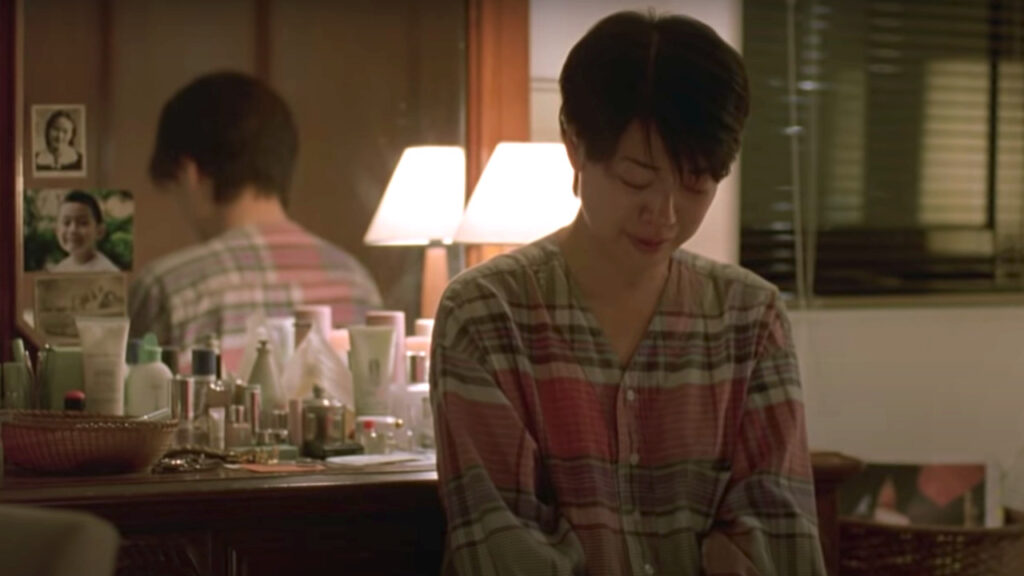
A family is never only one story
When I first saw Yi Yi, I thought it was a melodramatic family drama. I left thinking about how much of a life is lived beside other people, not directly with them. NJ, Ting-Ting, Min-Min, and Yang-Yang are close enough to affect one another every day, yet each person carries something the others cannot fully see.
That is the part that resonates with me most. We cannot fully see what other people are going through because we cannot see certain parts of ourselves either.
The film gives its youngest character, Yang-Yang, a camera. He photographs the backs of people's heads because they cannot see that part of themselves. It is a childlike gesture, but it gives the film one of its clearest ideas: another person can show you a piece of your life that was always there, just outside your view.
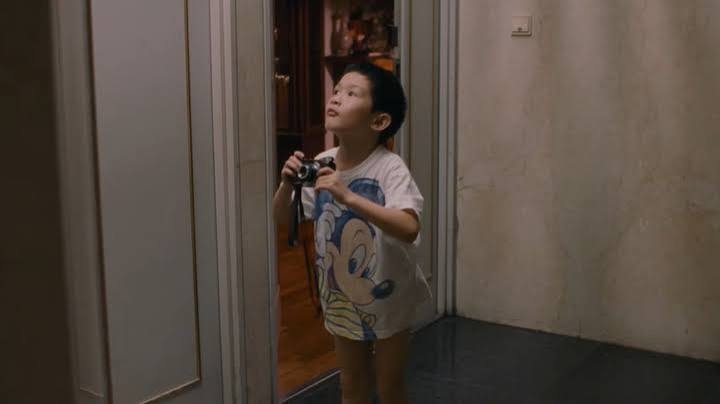
When I watched the film for the second time, I saw it through the lens of Yang-Yang and the way he tries to make sense of the adults and their actions. Even while people share a home, they can still miss the point of one another. They make decisions from old grief, private embarrassment, or an image of the future that nobody else has been shown.
NJ is the character many people would relate to while going through a midlife crisis and everything that comes with it. I connected with him the most.
Min-Min's relationship with her grandmother is something I miss in my own life. The way she navigates guilt, love, and loss is written beautifully. It cannot be explained; it can only be felt.
As Mr. Ota says, "You don't live the same day twice." Days may seem monotonous or ordinary, but it is how we perceive them that makes them matter. They are never the same.
A special shoutout to the static cinematography. It is one of the strengths of the film's narrative style and supports the thought that "the heart and mind are the true lens of the camera."
Enjoy ordinary life. Celebrate simplicity.
The part I want to keep
I still have my own memory to put beside this film. It belongs with the scenes that made me stop treating daily life as merely routine: the quiet rooms, the conversations that arrive late, and the people who are trying their best without knowing what they are missing.
Yi Yi changed me because it made that attention feel like enough. Nothing needs to explode for a day to matter.
hold my thoughts - pranav deepak